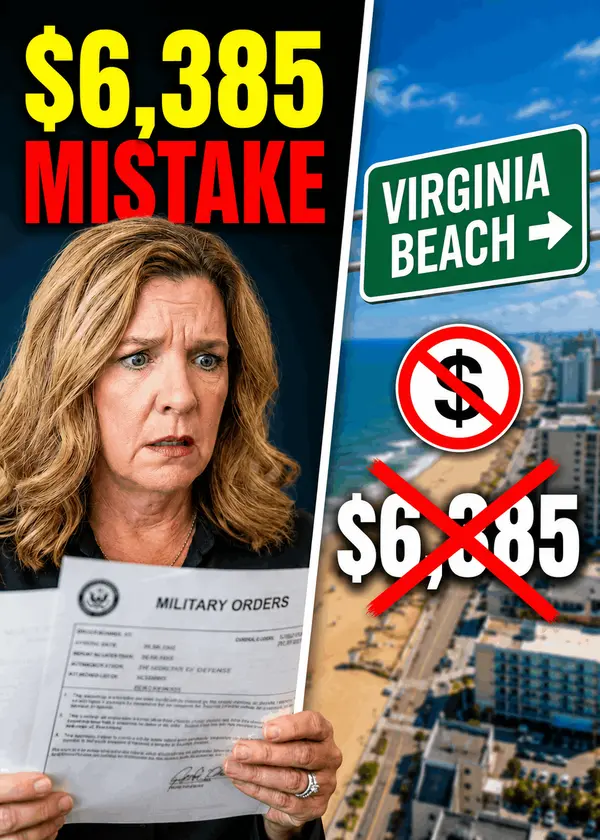
Virginia Beach Home Insurance Is Wrecking PCS Buyers — Here’s What No One Tells You
Virginia Beach Home Insurance Is Wrecking PCS Buyers — Here's What No One Tells You
Why does homeowners insurance matter so much for military PCS buyers in Virginia Beach?
In coastal Virginia Beach and Hampton Roads, homeowners insurance is not a side detail — it rolls into your monthly escrow payment and can affect your VA loan qualification, your debt-to-income ratio, and how far your BAH actually stretches. Two homes on the same street can produce very different insurance quotes depending on roof age, claims history, flood zone, and proximity to water. The safer strategy is to price insurance during the inspection period, before you remove contingencies or get emotionally attached to a house.
If you are PCSing to Virginia Beach, Norfolk, Chesapeake, Portsmouth, or anywhere across Virginia Beach and Hampton Roads, there is one cost that can quietly shift your entire home-buying plan. It is not just the interest rate. It is not just the purchase price. It is homeowners insurance. For military families using a VA home loan, insurance is not a side detail — it becomes part of your monthly housing payment, which means it can affect your BAH strategy, your debt-to-income ratio, and how comfortable the home actually feels after closing. In coastal Virginia Beach and Hampton Roads, this is no longer something to check at the last minute.
Why Home Insurance Matters More in Coastal Virginia
Virginia Beach is a coastal city. That means insurance companies are looking closely at risk factors such as wind exposure, storm history, flood risk, roof condition, age of the home, and prior claims. The Virginia State Corporation Commission provides consumer guidance for homeowners insurance in Virginia, and FEMA maintains official flood mapping resources used to help identify higher-risk flood areas. That does not mean every home in Virginia Beach has expensive insurance — it means PCS buyers should stop assuming the insurance number will be "normal." See why insurance is surging in Virginia Beach at 0:46.
Two homes in the same neighborhood — sometimes even on the same street — can produce very different insurance quotes depending on roof age, claims history, flood zone, proximity to water, wind or hurricane deductible structure, age and condition of major systems, and the carrier's appetite for coastal properties. That difference can matter a lot when you are trying to stay within BAH.
The PCS Mistake Most Buyers Don't See Coming
Most PCS buyers start with the big numbers — purchase price, interest rate, estimated taxes, HOA dues, and the VA loan payment estimate. Homeowners insurance often gets treated like a placeholder. That is the mistake. When insurance is part of your escrow payment, a higher premium does not stay separate from your mortgage. It rolls into the monthly number your lender uses to qualify you. So if the insurance quote comes in higher than expected, it can affect your total monthly payment, your VA loan approval, your debt-to-income ratio, how far your BAH really stretches, and whether the home still fits your comfort zone. The safer strategy is simple: price insurance early, not after you are emotionally attached to the house. See what this does to your monthly payment and BAH at 4:22.
PCSing to Virginia Beach and Hampton Roads and want to understand the full monthly cost picture before you shop? My free Military Relocation Guide walks veterans, active-duty service members, and surviving spouses through the timeline, the VA loan steps, and the base-by-base layout of Virginia Beach and Hampton Roads.
Flood Risk Is Not the Same as Homeowners Insurance
This is one of the biggest misunderstandings among military buyers. Standard homeowners insurance and flood insurance are not the same thing. FEMA's National Flood Insurance Program exists specifically for flood coverage, and FEMA's Flood Map Service Center is the official place to search flood map information. Virginia Beach also provides local guidance on protecting property and understanding flood risk through the city's Protect Your Property resources.
For PCS buyers, the key takeaway is this: do not assume a home is low-risk just because it looks good online. Before removing contingencies, you need to understand whether flood insurance is required, optional, recommended, or worth pricing as part of your long-term comfort plan.
The CLUE Report Problem Buyers Often Miss
A property's claims history can also affect insurance. A CLUE report — short for Comprehensive Loss Underwriting Exchange — is used by the insurance industry to report certain claim histories. The Consumer Financial Protection Bureau notes that LexisNexis C.L.U.E. collects and reports up to seven years of home insurance and personal property claims information to help inform pricing and underwriting decisions. Prior claims may cause an insurance company to look more closely at the property — including prior water damage claims, roof claims, wind claims, plumbing losses, or repeated claims over a short period. This does not automatically mean the home is a bad purchase. It does mean you want clarity before closing. A home can pass inspection, look beautiful, and still create insurance complications if the claims history, roof condition, or underwriting review raises concerns. See the claims history trap and CLUE reports at 3:00.
Why Roof Age Is a Big Deal
In Virginia Beach and Hampton Roads, roof age matters. A newer or well-documented roof can sometimes make the insurance process smoother. An older roof may require additional review, documentation, repairs, or replacement planning. This is especially important for homes built in the 1980s, 1990s, and early 2000s — which are common across parts of Virginia Beach, Chesapeake, Norfolk, and Portsmouth. PCS buyers should ask early: How old is the roof? Are permits available? Are replacement records available? Has the roof had prior claims? Will the insurance carrier require additional documentation? This is not about being afraid of older homes — it is about knowing the full number before writing the offer or negotiating repairs. See the roof factor and why age matters at 2:00.
Base-Specific Reality Check
When you are relocating to Virginia Beach and Hampton Roads, insurance should be considered alongside commute, bridge-tunnel patterns, base access, school fit, and lifestyle.
Near NAS Oceana and Dam Neck Annex
For buyers focused on Naval Air Station Oceana or Dam Neck, roof condition, coastal exposure, and flood considerations may all matter depending on the property. Homes closer to the ocean, low-lying areas, or older neighborhoods should be reviewed carefully for insurance and flood requirements.
Near Naval Station Norfolk
For families commuting to Naval Station Norfolk, do not look at insurance in isolation. If you are crossing water daily, commute stress, tunnel traffic, fuel costs, tolls, and insurance all become part of the real monthly lifestyle cost. This is where the Virginia Beach and Hampton Roads rule matters: when possible, stay on the same side of the water as your base.
Near JEB Little Creek–Fort Story
For buyers considering neighborhoods near Joint Expeditionary Base Little Creek–Fort Story, the age of the home can vary widely depending on the neighborhood. Some areas may offer great lifestyle access, but older homes may need closer review for roof age, systems, flood zone, and insurance underwriting.
Near Naval Medical Center Portsmouth
If you are assigned near Naval Medical Center Portsmouth, the Portsmouth side of the water can offer practical commute advantages for some families. Property condition, flood considerations, roof age, and insurance quotes still need to be part of the decision — especially in older neighborhoods or areas closer to water.
What Military Buyers Should Do Before Removing Contingencies
Here is the practical checklist for PCS buyers before removing contingencies: get an insurance quote during the inspection period; ask about wind or hurricane deductibles; confirm whether flood insurance is required; review the roof age and available documentation; ask whether prior claims history may affect insurability; compare the insurance quote against your true monthly comfort zone; do not rely only on the lender's initial estimate; and keep BAH, commute, tolls, and lifestyle costs in the same conversation. You are not just buying the house. You are buying the monthly payment, the risk profile, and the lifestyle that comes with it. See the 3 steps to protect yourself before closing at 5:41.
What Buyers Often Misunderstand
The biggest misunderstanding is assuming insurance is mostly based on zip code. It is not that simple. A home farther from the beach may still have a higher premium if it has an older roof or prior claims. A home closer to water may be manageable if the condition, elevation, and documentation are strong. That is why online estimates can only take you so far — you need property-specific numbers from a real insurance professional before you remove contingencies.
Lifestyle Trade-Offs for PCS Families
Military families are usually balancing more than just price. You may be weighing shorter commute versus higher home cost, more space versus older systems, waterfront lifestyle versus flood insurance, lower purchase price versus higher maintenance risk, same-side-of-the-water convenience versus neighborhood preference, and school fit versus commute reality. In Virginia Beach and Hampton Roads, miles do not always equal minutes. Bridges, tunnels, tolls, base gates, school drop-off, and summer tourism can all change the way a neighborhood feels Monday through Friday. Insurance is one more part of that full-picture decision. See the bigger picture for military buyers at 7:05.
FAQ: Home Insurance for PCS Buyers in Virginia Beach
Is homeowners insurance higher in Virginia Beach?
It can be, especially for homes with coastal exposure, older roofs, prior claims, or flood-related considerations. But it varies by property, not just by city. Two homes on the same street can produce very different quotes — which is why you need a property-specific quote before removing contingencies.
Does flood insurance replace homeowners insurance?
No. Flood insurance is separate from standard homeowners insurance. FEMA's flood insurance resources explain how flood coverage works through the National Flood Insurance Program. Both may be required depending on the property and lender requirements.
Can insurance affect my VA loan approval?
Yes. Homeowners insurance is part of your total monthly housing payment when escrowed, so it can affect loan qualification and debt-to-income calculations. A higher-than-expected insurance quote can shift whether a home still fits within your VA loan comfort zone.
Should PCS buyers avoid homes near the water in Virginia Beach?
Not automatically. The smarter move is to price insurance, verify flood requirements, review the CLUE report, and understand the trade-offs before writing or finalizing an offer. Some waterfront-adjacent homes are very manageable; others carry meaningful additional cost that needs to be part of the decision.
What is a CLUE report and why does it matter?
A CLUE report is a claims history report used by insurance companies. It can include up to seven years of home insurance and personal property claims information. Prior claims on a property — even before you owned it — can affect how an insurance carrier underwrites and prices coverage for that address.
When should I get the insurance quote?
During the inspection period, before you remove contingencies or become fully committed to the home. Getting the quote early gives you time to negotiate, adjust, or walk away if the numbers change the full monthly picture significantly.
If you want your next PCS move to be truly seamless, download my free Military Relocation Guide — or book a Zoom call with me and we'll talk through your move one-on-one, including the full monthly cost picture before you ever write an offer.
Found this helpful? I post deep-dive VA loan guides, PCS cost breakdowns, and neighborhood tips every week on my YouTube channel — Living in Virginia Beach VA. Click through to subscribe so you never miss one, or head over to leave a comment and let me know what your biggest PCS insurance question is.
Welcome home. This is real-life Virginia Beach.
About Megan Luker — Ready to Plan Your Move?
Megan Luker is a third-generation real estate agent and a retired Navy wife who has spent more than 35 years rooted in Virginia Beach and Hampton Roads. She holds the ABR, CLHMS, GRI, and MRP designations and specializes in helping veterans, active-duty service members, and surviving spouses use their VA loan benefit to buy near Naval Station Norfolk, NAS Oceana, Joint Expeditionary Base Little Creek–Fort Story, Naval Air Station Oceana Dam Neck Annex, Naval Support Activity Hampton Roads, Joint Base Langley–Eustis, Coast Guard Base Portsmouth, and any other military or DoD installation across Virginia Beach and Hampton Roads. She has guided more than 300 military families through their PCS moves.
Families relocating to Virginia Beach, Chesapeake, Norfolk, Portsmouth, or anywhere across Virginia Beach and Hampton Roads work with Megan to narrow down what actually fits their budget, commute, school needs, HOA comfort level, and military timeline.
Her goal is simple: help military families move with clarity, confidence, and the right strategy for their situation.
Megan Luker, Virginia Beach & Hampton Roads Military Relocation Expert
Lukerative Group at REAL Broker LLC | 855-450-0442
HomesAndVeterans.com | 757-703-1590
Categories
Recent Posts